Beaty Biodiversity Museum Blog

Dr. Newman Founding Director of Vancouver Aquarium Came for a Visit

Published by karen | Tue, 05/15/2012 - 16:08

Recently, Patrick Lewis, director of the UBC Biodiversity Collections, was pleased to host a visit with Dr. Murray Newman and wife Kathy on a visit of the Beaty Biodiversity Museum. Dr. Newman is an inspirational person who has been recognized for his contributions as a recipient of the Order of Canada as well as the Order of British Columbia. His profile on the Order of BC website states, "during his tenure, he built the Aquarium into one of the most prestigious marine facilities in the world, without the assistance of public subsidies. The Aquarium became not only a major tourist attraction, but also an important educational centre for students, starting as a small park facility, and culminating as the large, multi-faceted Vancouver Public Aquarium."


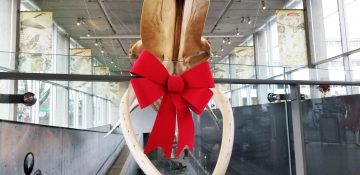
Murray Newman, Patrick Lewis (Museum Director) and Kathy Newman pose with the mouth of the blue whale skeleton in the background.

Spiders in Broneo – Team Salticid

Published by WayneMaddison | Thu, 05/10/2012 - 16:26

Dr. Wayne Maddison, Director of Spencer Entomological Collection at the Beaty Biodiversity Museum recently returned from an expedition in Borneo in search of jumping spiders. This series shares his entomological adventures in the wild.


For the next five weeks, I will be in Borneo along with a student (Edy Piascik) to find jumping spiders. My reason to come to Borneo is to find jumping spiders that live nowhere else. Most biodiversity is local. What you find in Borneo will be different species than what you find in New Guinea, different from Africa, and different from Canada. For jumping spiders, the pattern is particularly striking, because not only are the individual species local, but whole evolutionary groups tend to be local, having evolved and diversified in just one continental area. This means for instance that most South American species are closely related to one another, and not closely related to the species in Australia or Africa. It also means that when you go to an unexplored area, the species you find might not only be new, but very new – distantly related from everything else known.


The group of explorers is known as Team Salticid Borneo, since Salticids, commonly known as jumping spiders, are our focus. We have come together from different backgrounds to search for salticids.

From left to right in the photo, we are: Ch’ien Lee, a wildlife photographer and naturalist based here in Borneo; Edy Piascik, graduate student at the University of British Columbia; myself, with the goofy smile (anticipating cool salticids); and Alex Ang, a musician from Malaysia with an interest in spiders and scorpions.


In the northeast edge of the Malaysian state of Sarawak lies Gunung Mulu National Park, a mountainous area with wonderful forests. It’s a prime destination for ecotourists because of its amazing limestone pinnacles and striking biodiversity. For us, the attraction is spiders.


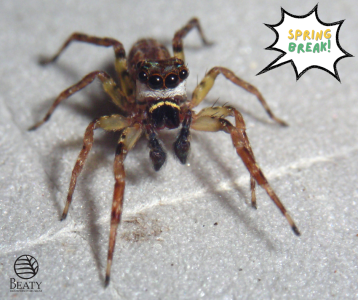
We need to settle in and get our bearings. Tomorrow, the serious work begins. But, we couldn’t help but look for spiders, for just a few moments. Alex found this cute little Neobrettus whose first legs have striking brushes on them. As she walks, her first legs are in constant motion, waving up and down, and this motion is made especially visible by the brushes. Why it might help the spider to make such a fuss with its legs, we don’t know:

Neobrettus female, from Mulu.


Originally published at Scientific American, Wayne Maddison’s Spiders in Borneo Series

Build an Algal Pet with the Museum

Published by karen | Tue, 05/08/2012 - 17:00


Images courtesy of Jeannette Takashima


Needing a gift for Mother’s day? Would you like a new way to express your horticultural skills? Looking for a pet that doesn’t need a leash?
 
Look no further! This Saturday, build your own beautiful algal pet with Ellie Duffield. Learn tips and tricks for selecting algae, how to feed them, and how to make your very own pet.
 
Saturday, May 12, 2012
4:00-4:30 p.m.
Beaty Biodiversity Museum
Minimum $10 donation per person. Cash only, payable at the door.
Space is limited. Register online early to ensure your place!
 
This half-hour workshop is appropriate for ages 10+. Any youth between 10 and 15 are required to have adult supervision (free) or have an adult participate alongside them (an extra ticket is needed).
 
Check in at the museum admissions desk with your ticket and donation, as early as 3:45 p.m. Museum admission is not included in the donation fee. Donations will cover material costs, as well as support the Northwest Algal Symposium student scholarship fund.
 
Ellie Duffield is the curator of the Algal and Fungal University of Washington Culture Collection, at the University of Washington University of Washington, Seattle, Washington. This workshop is hosted in conjunction with the Northwest Algal Symposium, taking place in Vancouver May 11-13, 2012. For more information on the Northwest Algal Symposium, please check out their website.

A Step Closer to Releasing Endangered Oregon Spotted Frogs

Published by karen | Wed, 04/25/2012 - 10:43

On April 19, 2012, Karen Needlam, Rob Curtiss, and Chris Stinson of UBC Beaty Biodiversity Museum joined Jennifer Heron, Invertebrate Specialist with the BC Ministry of Environment, and the Oregon Spotted Frog (OSF) Recovery Team for a day of field work near Harrison Hot Springs. The pond the group visited has been identified as recovery habitat and a potential release site for Oregon Spotted Frogs, which are endangered species in BC.

(Top) Rob Curtiss examining a net-ful of bugs; (Bottom) Chris Stinson showing off a charming Western Toad.

Karen, Rob, Chris, and Jenny conducted a survey of aquatic insects to help establish a baseline prior to any introduction. These insects will be the major food source for the adult frogs. Amphibians currently residing in the pond were also catalogued.

Once the Oregon Spotted Frogs are released and hopefully establish, the group will return to sample the aquatic insects again to see how the community has changed over time.

A Reflection on Mitey Media

Published by karen | Mon, 04/23/2012 - 13:48

In February 2012, Moss Mite Ecologist Gennifer Meldrum, together with new media artist Luke Moloney, presented Mitey Media, an interactive video exploration of the moss mite micro-universe at the Beaty Biodiversity Museum. The following is her reflection on her experience with the project.


Mites are fascinating and beautiful creatures. These tiny 8-legged arthropods are closely related to spiders. Their small size (0.1 mm to 2 mm) makes them nearly invisible to the naked eye, so most people don't know much about them. If anything, people have negative associations with mites as those they hear about are less charming pests such as ticks, dust mites, or spider mites. There are, however, many mites that are free living and provide beneficial ecological services. Soil mites, for example, are important for decomposition and nutrient cycling.


I have been studying mites living in moss patches to investigate how habitat corridors influence the recovery of ecological communities following disturbance. This research involves looking at dead mites under the microscope to develop a picture of how landscape manipulations affect mite diversity. While this method is highly informative, I often felt that my research would benefit from gaining a broader appreciation of mite biology.


Although I study mites, I have never seen them alive and operating in their environment. This feeling motivated my collaboration with new media artist, Luke Moloney, using video technology to spy on mites crawling in moss patches. In addition to my scientific curiosities, we also had artistic motivations for the project, so we sought to unveil the biology of mites in a stunning interactive display. The result of our work is 'Mitey Media', an exhibit that involves a large-scale projection of live-feed video of mites crawling in moss. Through a special time-manipulation technology, we overlaid the mite activity that occurred over a longer period of time, and that gave insight into the movement patterns of the mites and made the moss appear to be absolutely crawling with critters.


We showed Mitey Media at the Beaty Biodiversity Museum on February 26, 2012. We did a one-day pilot exhibit in their auditorium to test out the system and gather documentation of the piece for an application to an arts festival. It was a great day at the museum! The moss was on display in a sealed glass container with its image projected on the large movie screen. As people came to check out the exhibit, Luke and I would discuss aspects of mite biology and explain the technology behind the presentation. To engage visitors further with mite biology, we also brought high resolution photographs of mites and some microscopes set-up with preserved specimens. Often people were surprised to find out that their favorite resting place in the forest is so full of life!


We had a great time running the exhibit at the Beaty Biodiversity Museum. We hope to do it again one day soon. Meanwhile, we are working on applying the video system to perform an experiment examining mite movement between moss patches. For more information and scenes from the exhibit at the Beaty Biodiversity Museum, check out the short documentary:


Jellyfish on the Rise

Published by karen | Fri, 04/20/2012 - 15:33

Jellyfish are increasing in the majority of the world’s coastal ecosystems, according to the first global study of jellyfish abundance by University of British Columbia researchers.

In a study published in this month’s edition of the journal Hydrobiologia, UBC scientists examined data for numerous species of jellyfish for 45 of the world’s 66 Large Marine Ecosystems. They found increasing jellyfish populations in 62 per cent of the regions analyzed, including East Asia, the Black Sea, the Mediterranean, the Northeast U.S. Shelf, Hawaii, and Antarctica.

NB: A world map indicating jellyfish abundance and photos of different types of jellyfish interfering with fishing in various habitats are available at http://www.publicaffairs.ubc.ca/?p=41229.

“There has been anecdotal evidence that jellyfish were on the rise in recent decades, but there hasn’t been a global study that gathered together all the existing data until now,” says Lucas Brotz, a PhD student with the Sea Around Us Project at UBC and lead author of the study.

“Our study confirms these observations scientifically after analysis of available information from 1950 to the present for more than 138 different jellyfish populations around the world.”

Jellyfish directly interfere with many human activities – by stinging swimmers, clogging intakes of power plants, and interfering with fishing. Some species of jellyfish are now a food source in some parts of the world.

“By combining published scientific data with other unpublished data and observations, we could make this study truly global – and offer the best available scientific estimate of a phenomenon that has been widely discussed,” says Daniel Pauly, principal investigator of the Sea Around Us Project and co-author of the study. “We can also see that the places where we see rising numbers of jellyfish are often areas heavily impacted by humans, through pollution, overfishing, and warming waters.”

Pauly adds that increasing anecdotal reports of jellyfish abundance may have resulted from an expansion of human activities in marine habitats, so the study also provides a concrete baseline for future studies.

The study also notes decreases in jellyfish abundance in seven per cent of coastal regions, while the remainder of the marine ecosystems showed no obvious trend.


Source: UBC Public Affairs

The Fascinating Work of Preparing Bird Specimens

Published by karen | Tue, 04/17/2012 - 16:14


Have you always wondered how bird specimens are preserved? An exciting series of PowerPoint presentations launched by Ildiko Szabo, the museum’s Honorary Assistant Curator of Birds, aims to give instructions to those interested in contributing to and using avian museum collections.


The project began in 2010 when a number of presentations were posted online. Ildiko Szabo has recently completed the series with the additional resources on skeleton preparation, DNA collection, and washing birds for ecotoparasites. The latter contains a pictorial run through the bizarre looking suite of insects that call the feathered outside of birds home.


The comprehensive webpage engages visitors with the techniques and skills used by curators, students, and volunteers to skin, stuff, and label specimens. The 12-part series includes the following topics:

  • Intro: The look of the bird (includes a bird quiz)
  • Part 1 Spread wings, a good place to start
  • Part 2 Skinning your first bird
  • Part 3 Problems with bird heads, partial skeletons and other methods
  • Part 4 Stuffing your first bird
  • Part 5 Other ways to stuff and pin study skins and bird parts
  • Part 6 Sexing birds using gonads (includes quiz with answer sheet)
  • Part 7 Determining skull pneumatization & Skeleton preparations
  • Part 8 DNA sampling & Gut analysis
  • Part 9 Washing birds for ectoparasites & Drying washed skins
  • Part 10 Recording fat levels & Cleaning fatty and stinky skins
  • Part 11 Flat skins, shmoos, and other types of study skins
  • Part 12 Labelling: The most important step


For more information on working with birds and other resources, please visit the Working with Birds section on our website

Grimmia Workshop by Roxanne Hastings

Published by karen | Thu, 04/05/2012 - 14:21

Grimmia Workshop by Roxanne Hastings
May 9-10, 2012


Hosted by the UBC Herbarium at Beaty Biodiversity Museum, this two-day bryophyte workshop will concentrate on the genus Grimmia, one of the most diverse and abundant group of moss to grow in western North America. This complex and often difficult genus is not easily keyed out using a traditional dichotomous key. During the workshop, the instructor will present a series of tables breaking the genus into four easily recognized subgenera, thus making identification easier and reliably accomplished by comparing a diversity of characters. Through lectures and hands-on experience, participants will learn the key characters of Grimmia that are critical to using the tables and dissecting techniques that will maximize the probability of correct identification. Participants are encouraged to bring collections of Grimmia with them to work on during the workshop.


Roxanne Hastings is the Curator of Botany at the Royal Alberta Museum. She received her Master's degree in Plant Ecology from the University of Alberta (1984) and her current research focuses on moss systematics and floristic biogeography as related to continental drift and the structure of ancient continental landscapes. She has contributed treatments of Grimmia and Coscinodon to the treatments of bryophytes in the Flora of North America North of Mexico and has published five new species in the Grimmiaceae and one new lichen taxon. Currently Roxy is working on several new treatments of Grimmia from California.


Class limit: 15 person.

Registration deadline: May 1, 2012


For more information and registration, please contact olivia.lee@botany.ubc.ca

Mist-netting at UBC Botanical Garden

Published by alivia | Wed, 04/04/2012 - 14:00

People aren’t the only visitors to the botanical gardens at UBC – the diversity of trees and plants also attracts numerous bird species throughout the year. This past week UBC students got to experience this diversity first hand: Darren Irwin, a professor teaching a 4th year Ornithology course, and David Toews, a PhD candidate and Darren’s teaching assistant, took the students out mist-netting in the gardens. To read the full story, please visit UBC Botanical Garden's blog post here.


Museum Review: A Blend of Science and Entertainment

Published by alivia | Tue, 04/03/2012 - 12:41

Charles Duncombe, director of UK holiday company Holidaysplease, recently visited the Beaty biodiversity museum in Vancouver. He found a blend of science and entertainment, part of which came from an unexpected source.....

Although I like the Discovery Channel as much as the next person, I had no idea what to expect from a biodiversity museum. I was slightly worried that it was going to be a few, small, sorry specimens in jam jars. This was quickly dispelled when I entered the museum and was confronted with a full size blue whale skeleton suspended above my head! 


Stretching the entire length of the entrance hall, the skeleton is simply massive. To give you an idea of scale it would have had no problem in swallowing myself whole and then probably finishing off my car as a mere hors d'oeuvre.

We made our way underneath the mouth of this colossus, checked in at reception and descended down to the main exhibits. 


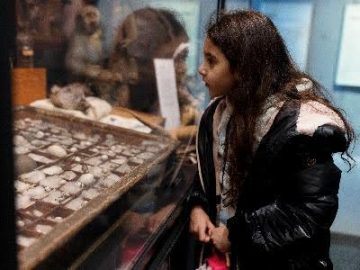
As you enter this underground world you are faced with corridors running across the width of the room. When you walk down each corridor you find that they are lined with a huge collection of stuffed/embalmed animals on either side. For the scientifically minded it is a truly fascinating display. To the squeamish it is quite simply a test of nerve. My fiancé fell into the latter category and that’s when an unexpected source of entertainment arose.....

You could send her down each corridor and judge how scary the exhibits were by how narrow the gaps were between the fingers she was holding over her eyes!

You can see a quick example at Vancouver Biodiversity Museum Visit.

I am not sure whether the scientists who collected these important specimens envisaged them being enjoyed in this way but hopefully it’s a novel way of increasing the reach of their work!

Unfortunately for my fiancé there was no shortage of exhibits for her to “run the gauntlet” past. 17,500 birds, 18,000 mammals, 1600 amphibians/reptiles and 800,000 fish to be precise.


Many of the smaller animals are hidden in drawers and despite my best efforts my finance was not willing to participate in “Open the drawer Russian roulette” . Having a good number of specimens in drawers was a very good idea as it meant we did not have an impractical number of corridors to navigate. This in turn meant we managed to see the majority of the significant exhibits in good time. 

When you see the sheer number of different specimens you are struck by how diverse nature is. Not just diversity of species but also diversity within species. Differences that have been sculpted by mother nature over millions of years can appear very subtle but often mean the difference between life or death for the owner.


Moving away from the records of current creatures we arrived at the area belonging to their ancestors in the fossil section. Again the size of the collection is vast with more than 20,000 specimens in total. Here you can learn about the ancient world and the unimaginable numbers relating to size and time which attaches thereto. For example you can see blue-green algal fossils that are a mere 500 million years old! These sort of timescales make you feel pretty insignificant in the grand scheme of life on earth.


Away from the main chamber there are break-out rooms which contained one off exhibits that change from time to time. We enjoyed a couple of these and then popped into the cafe near the entrance. 

I happily ate a hearty meal. My fiancé on the other hand just had a drink to calm her nerves!

All in all we had a fantastic trip and would recommend the museum if you are looking for some genuine diversity in the sort of attractions to enjoy on holiday to Vancouver.


Charles Duncombe is a director of UK holiday company Holidays Please which arranges Vancouver Holidays  and holidays to other exclusive destinations.
 

Pages

Subscribe to RSS - blogs
News and Events

Hours
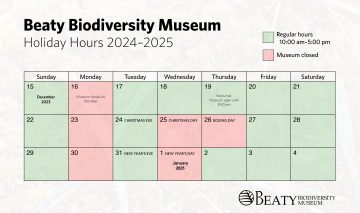
Open Tuesday to Sunday, 10am to 5pm.
Closed on Mondays for research.

Birding Bonanza
March 10 - May 25, 2012
Discover the amazingly diverse lives of birds! Exclusive displays and activities will feature special collections of bird specimens, allowing visitors to view local birds like never before. Full details

Feast
May 17 - July 22, 2012
To eat or be eaten? Through stunning photographs, internationally acclaimed nature photographer Brad Hill presents an intimate look at animals feasting in the wild. Full details

Be sure to check out our full online calendar of daily and special events!

Raising Big Blue now showing at the Museum. Check the News and Events page for showtimes.


Beaty Biodiversity Museum RSS Feed Beaty Biodiversity Museum on YouTube Beaty Biodiversity Museum on Flickr

a place of mind, The Univeristy of British Columbia