
The University of British Columbia
UBC - A Place of Mind
The University of British Columbia Vancouver campus
Beaty Biodiversity Museum
menu
Beaty Museum
  • Home
  • Visit
    • About the Museum
      • Indigenous Initiatives at the Beaty Biodiversity Museum
    • Hours & Directions
    • What’s On
    • Admission Rates
    • Become a Member
    • Gift Shop
    • Nature Club
    • Procedures for a Safe Visit
    • Accessibility
    • Visitors Guide
    • Audio Tour
  • Exhibitions
    • 66 Birds/3 Degrees
    • Big Blue
    • Natural History Collections
    • Culture at the Centre
    • Dinosaur Trackways
    • Earth Timeline
    • Online Exhibitions
      • Sturgeon Harpoon Knowledge Web
    • Upcoming Exhibitions
      • Slippage: shaped by time
    • Past Exhibitions
      • Source to Glass
      • Peatland Mosses: A Printmaking Perspective
      • Meteobotany – Bettina Matzkuhn
      • Beneath the Emerald Green Waves
      • Mathemalchemy
      • Drift: from the forest to the sea
      • Eelgrass, prairies under the sea
      • Disrupting Wild Echoes
      • The Curious World of Seaweed
      • ReCollections
      • Fire Followers
      • Next Spring
      • Biophilia
      • Documents of Collapse
  • Learn
    • Booking Information
    • In-Person Tours and Programs
    • Online Tours and Programs
    • Beaty Boxes
    • Educator Resources
  • Research
    • Search our Collection Databases
    • Collections
    • Collections Policies
    • Biodiversity Research Centre
    • Biodiversity Lecture Series
    • Articles & Papers
  • Donate
    • Beaty Boxes
    • Collections
    • Teaching & Learning
    • Museum Support
  • Get Involved
    • Join the Team
    • Artists in the Museum
  • Connect
    • News & Stories
    • Contact
    • Media
    • Newsletter
    • Rent the Museum
    • Annual Report
» Home » 2015 » March » 26 » The Cloud is not in the sky; it is in a basement holding our Big Data

The Cloud is not in the sky; it is in a basement holding our Big Data

By Adriana Suarez-Gonzalez, PhD Candidate, Botany, UBC on March 26, 2015

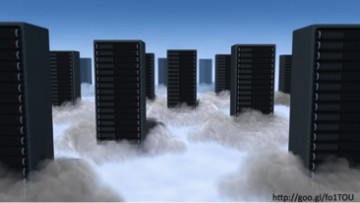
When I think about The Cloud, I tend to imagine blue skies and white fluffy shapes. However, this Cloud doesn’t look anything like that. It actually looks like a black long block and it is usually found in dark basements.


When I think about The Cloud, I tend to imagine blue skies and white fluffy shapes. However, this Cloud doesn’t look anything like that. It actually looks like a black long block and it is usually found in dark basements. The Cloud, the one in the computational world, is a system of computers able to hold unimaginable amounts of information, including your google searches, all your selfies and even your own genome. All this type of information is called Big Data and it is currently being used in business, marketing, and genomic research.
Cloud%20post%201

In business, Big Data has been implemented to enhance productivity and increment revenue generation. Some even suggest that companies should focus first on understanding the messages behind their numbers before scaling up. In marketing, Big Data has been used to track how consumers behave explaining why you tend to see ads related to your current needs. The web is not reading your mind; it is only tracking your google searches and showing you what you ‘need’ to see.

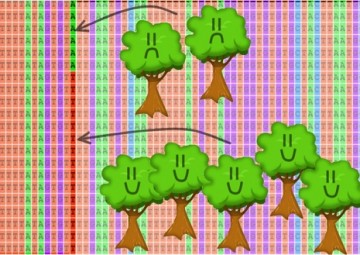
In research Big Data has revolutionized the field of genomics, and I realized what it really means last summer. I had worked with genetic data from trees before but nothing like whole genomes. The gene sequences – which are strings of letters (bases) of DNA: A for Adenine, G for Guanine, T for Thiamine and C for Cytosine – I was used to working with were up to 3,000 letters or base pairs long. I was able to see them on my laptop and even highlight them with colours.
Cloud%20post%202

But the whole genome sequences of the tree I started to work with last year had millions of base pairs! To put this into perspective, the information in one tree genome is equivalent to the information in 50,000 selfies! Of course I couldn’t even open these files on my computer and had to use bioinformatics tools to process them. By using this data and cutting-edge bioinformatics analysis, I was able to find ‘alien’ DNA which originated from a different tree species than the one I was studying.

The potential of Big Data is becoming more and more evident, but to exploit it we need both ‘Big Clouds’ and innovative bioinformatics tools. The ability to make market predictions, consumer profiles and understanding our own genomes relies on are the capacity to see the forest through the trees and decipher the stories behind the numbers.


Photo credits: [thumbnail & banner] Flickr user Brandon Burns.


Read More | No Comments

  • Previous
  • Next

Get social with us

Beaty Biodiversity Museum
Vancouver Campus
2212 Main Mall
Vancouver, BC Canada V6T 1Z4
Tel 604 827 4955
Email info@beatymuseum.ubc.ca
Find us on
      
About UBC Science | News and events
Dean's office | Leadership team | Departments | Research units and institutes | UBC Attractions
UBC Science
UBC Faculty of Science, Office of the Dean Earth Sciences Building, 2178-2207 Main Mall
Vancouver, British Columbia Canada V6T 1Z4
Back to top
The University of British Columbia
  • Emergency Procedures |
  • Terms of Use |
  • Copyright |
  • Accessibility