Spiders in Borneo - Replaying the Tape of Life
Our lives at Lambir were more or less as at Mulu — breakfast by 8 and in the field by 9. Hike anywhere from a few minutes to an hour. Record latitude/longitude and other data. Sample intensely for 40 minutes, focusing on either tree trunks, foliage, or
One big piece of news from Lambir is that we found more Hispo. I previously posted, with great excitement, the news that Edy had found a Hispo female in Mulu. I’m pretty certain it represents a species new to science, but even more exciting, it is the
You’re walking through a Borneo rainforest, keeping your eyes focused on shrubs and tree trunks that might be good opportunities for spider hunting, and suddenly your forward progress is halted. Three possible explanations: (1) You’re in one of those n
A group of students and professors from Yale University have found a fungi in the Amazon rainforest that can degrade and utilize the common plastic polyurethane (PUR). As part of the university’s Rainforest Expedition and Laboratory educational program
Plastic pollution off the northwest coast of North America is reaching the level of the notoriously polluted North Sea, according to a new study led by a researcher at UBC. The study, published online in the journal Marine Pollution Bulletin, examined
A recent Ispos Reid poll found that 62% of Canadians think the federal Government is not doing enough to protect species at risk. One way that the government could do more was highlighted in a recent Op-ed in the Globe and Mail, co-authored by Sally Ot
With the field work done, our attention turns to handling all of the specimens. We have barely had time to glance at most of them. My curiosity to peruse them under a microscope is strong, as I want to figure out what we got, but that will have to wait
On Monday Nov 25th, the new federal Fisheries Act (FA) came into effect (see previous Museum blog post). The new FA results in a shift from a general biodiversity-based set of protections to a fishery-based set of regulations. The FA used to protect al
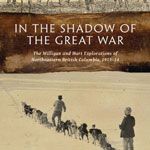
The UBC Herbarium is pleased to announce the publication of Jay Sherwood’s latest book: In the Shadow of the Great War, the Milligan and Hart Explorations of Northeastern British Columbia, 1913-1914. The Vancouver-based author and historian visited the herbarium to research some of the earliest BC specimens of the collection – pressed and mounted plants dating back to 1913.
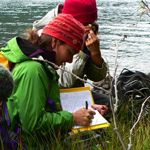
The 4th Annual Schofield Bryophyte & Lichen Foray was held September 26-29, 2013, in Wells Gray Provincial Park, as one of the many events of the Park’s heritage year celebration.