
Eric B. (Rick) Taylor, Professor UBC Zoology and Curator of Fishes, Beaty Biodiversity Museum

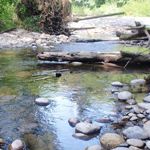
Recent Changes to the Fisheries Act and what it means for Biodiversity
The conservative government of Stephen Harper introduced several profound changes to Canada’s environmental legislation in its budget bill (C-38) of June 2012. Amongst these were changes to the federal Fisheries Act (FA), Canada’s longest serving and much envied1 piece of environmental legislation. Here, I will outline the history of the Fisheries Act, how it has been changed by the passage of Bill C-38, and what it means for Canada’s freshwater fish biodiversity. I focus on freshwater fishes because the key change to the FA involves habitat protection, and habitat loss and degradation are much more series threats to freshwater fishes than for marine fishes2,3. In addition, while there is often much focus on the diversity of marine fishes which is, undoubtedly, spectacular, consider that almost 40% of all fishes (some 33,000 species and counting) occur in freshwaters yet freshwater habitats make only 0.8% of the total surface area of the Earth! Per unit area, diversity of freshwater fishes is unmatched.
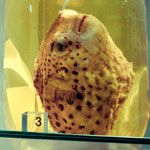
Fishes are way cool because…
March 2, 2014, 1:00pm
Eric Taylor
Dive in with Dr. Taylor for an exploration on why fishes are so diverse and an illustration on some of their truly amazing adaptations.
Included with museum admission or membership

FestEVOLVE 2014
February 12-23, 2014
Join us in celebrating the theories, the people who introduced the world to these concepts, and the evidence of evolution through the fossil record. Museum tours, activities, and crafts will have an evolutionary focus, including creating your own fossils, DNA extraction demos, and touring our neighbour, the Pacific Museum of Earth.
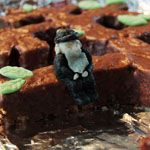
FestEVOLVE Cake Contest
The Beaty Biodiversity Museum hosted the 6th annual “Bake a Cake for Darwin” contest on February 12. This year, we encouraged participants to bake a cake for Wallace as well. There were 9 wonderful entries, and over 60 hungry spectators. Click through for the winners and links to photos.
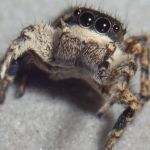
BBM researcher in the field
Wayne Maddison (professor of Zoology/Botany and former BBM director) is conducting field work in Jalisco, Mexico (west central part of the country) collecting and observing all sorts of wild and wonderful insects and spiders. Click through for the link to his daily (almost) blog online!
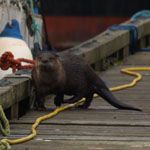
Weasels are way cool because…
February 2, 2014, 1:00pm
Chris Stinson
Join Chris Stinson, Curatorial Assistant of Mammals at the Beaty Biodiversity Museum, as he uncovers his favourite group of mammals; weasels and their fellow group of mustelids.
Included with museum admission or membership
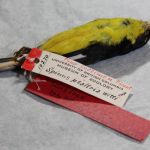
Rare Event: Repatriation of Avian Type Specimen
The Cowan Tetrapod Collection Staff are thrilled to announce the repatriation of the type specimen of Spinus psaltria witti, a subspecies of Lesser Goldfinch collected on Maria Magdelena, Tres Marias Islands, Mexico. Dr. Peter Larkin, a former Dean of Graduate Studies at UBC, collected this specimen on March 1st 1961. Dr. Peter Grant, who is best known for his work on Galapagos Finches, described this subspecies when he was a PhD Candidate at the University of British Columbia.
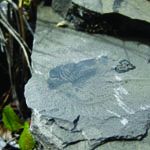
New fossil bed found by scientists hailed as ‘motherlode’
Scientists say a recently located fossil site on the Alberta-B.C. border is already yielding major new discoveries about early animal evolution. The Marble Canyon fossil beds were located in 2012 by a team of Canadian, U.S. and Swedish researchers in Kootenay National Park, about 40 kilometres from the 505-million-year-old Burgess Shale in Yoho National Park — which is considered one of the most important fossil fields in the world.
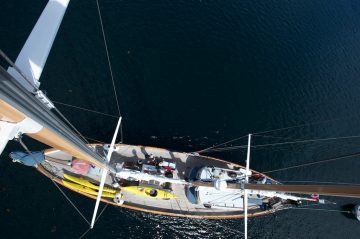
Outer Shores Expeditions – A Vessel for Engaging with Nature
Outer Shores Expeditions I was recently asked: “Why, after completing a PhD and Postdoctoral Fellowship in marine ecosystem science in the Department of Zoology, Institute for Resources, Environment and Sustainability (IRES), and the Biodiversity Research Centre at UBC, did you decide to buy a classic wooden schooner and start a natural history and educational travel […]
Exhibition: Remnants: A Visual Survey of Human Progress Opens Today
Connecting Human Progression and Reduction of Nature Through Art Human progression comes at the cost to nature. Through drawing and collage, UBC Botanical Garden’s Artist in Residence, Dana Cromie explores his reaction to this happening in Remnants: A Visual Survey of Human Progress. This new visual art exhibition opens today at the Beaty Biodiversity Museum. […]