
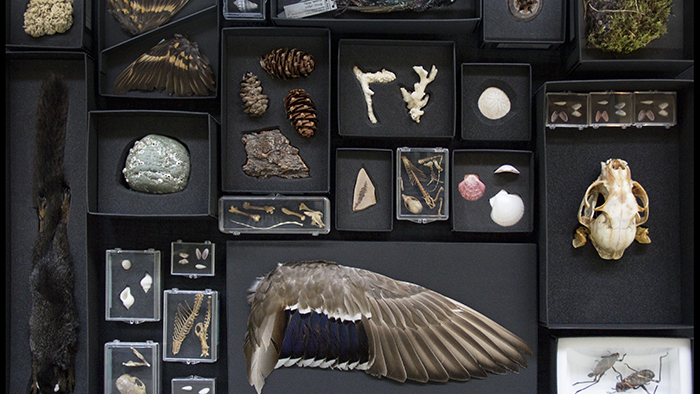
Focusing on creating visual representations to record scientific observations, the Inquiry Beaty Box contains specimens, flashcards, and a suggested lesson plan so students can learn more about:
- The importance of sketching in the field of science
- The different types of techniques used when sketching natural history specimens
- Sketching as a way of identifying observable features of plants and animals
Request an Inquiry Box for your classroom here.
How to pack your Inquiry Beaty Box
Click here for a video on how to handle Beaty Box specimens.
Inquiry Box Dimensions:
- Length: 55.4 cm (21.8”)
- Width: 38.8 cm (15.3”)
- Height: 25.0 cm (9.8”)
- Weight: 5.94 kg (13.1 lbs.)

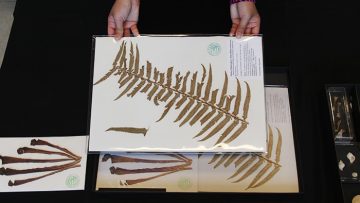
- Tray 1
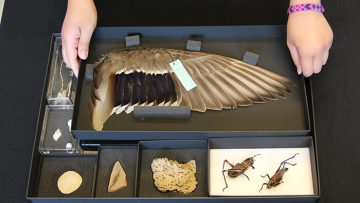
- Tray 2
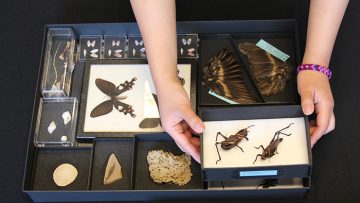
- Tray 2
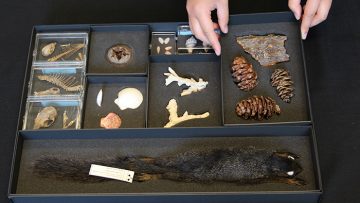
- Tray 3
Sketching Lesson Plan
Learning Objectives: After this lesson, students should be able to:
- Identify the biodiversity of living things in the nature world
- Recognize the observable features of plants and animals
- Communicate observations and ideas by drawing and by using oral or written language
- Communicate through the arts using new artistic techniques and perspectives
Big Ideas & Concepts
- Arts Education
- K-1: Develop processes and technical skills in a variety of art forms to nurture motivation, development, and imagination
- Arts Education 2: Develop processes and technical skills in a variety of art forms to refine artistic abilities, reflect on creative processes and make connections to other experiences
- Arts Education 3-5: Connect knowledge and skills from other areas of learning in planning, creating, and interpreting works for art
- Arts Education 6-7: Demonstrate an understanding and appreciation of personal, social, cultural, historical, and environmental contexts in relation to the arts; interpret creative works using knowledge and skills from various areas of learning
- Arts Education 8-12: A variety of content links can be explored during this program.
- Science Education
- Kindergarten: Plants and animals have observable features; daily and seasonal changes affect all living things
- Science 1: Living things have features and behaviours that help them survive in their environment
- Science 2: All things have a life cycle
- Science 3: Living things are diverse, can be grouped, and interact in their ecosystems.
- Science 4: All living things and their environment are interdependent
- Science 5: Multicellular organisms have organ systems that enable them to survive and interact within their environment
- Science 6: Multicellular organisms rely on internal systems to survive, reproduce, and interact with their environment
- Science 7: The theory of evolution by natural selection provides an explanation for the diversity and survival of living things
- Science 10: Genes are the foundation for the diversity of living things
- Biology 11: All organisms have characteristics that define them as living and interdependent. Life can be organized in a functional and structural hierarchy ranging from cells to the biosphere; living things are interdependent; living things are diverse and evolve over time
- Biology 12: Cells are the basic unit of life
Educators Manual
- Each box comes with a comprehensive Educator Manual to provide you with all the information you need to confidently share and explore the Inquiry Beaty Box with your group.
- Manual includes:
- Beaty Box Basics
- Information on the specimens in the box - where they come from, how they are prepared, and information on how to handle them safely
- Information about the Beaty Biodiversity Museum
- Click here to download Beaty Box Basics
- Customized Lesson Plan and Specimen Information
- A lesson plan and list of relevant "Big Ideas" and "Core Concepts" outlined in the BC Curriculum
- Flashcards for each specimen with images and background information
- Suggestions and links to additional activities
- A USB key with a digital copy of the manual plus extra images and activities you can print off or download
- Click here to download the Inquiry Box Lesson Plan and Specimen Information
- Beaty Box Basics
This page has downloadable materials that will support your use of the Beaty Box. If you’ve used Beaty Boxes in the past, you can think of this resource page like the included USB stick on other box manuals.
Materials include worksheets, answer keys, research papers, images, and more! We suggest using WiFi or another connection that is best for large PDF files.